

Most often, when you ask your doctor here in the US about herbs, you will be told that herbs are untested, have no clinical studies to back them up, have no proof that they work, and that they are dangerous to take. Your doctor may say herbs are a waste of your money.
This is the same message you get when you search Google or look up herbs on the internet. The Google page will state that herbs are unsafe and unproven. We need more large, double-blind studies before we recommend herbs. Only clinical trials are valid.
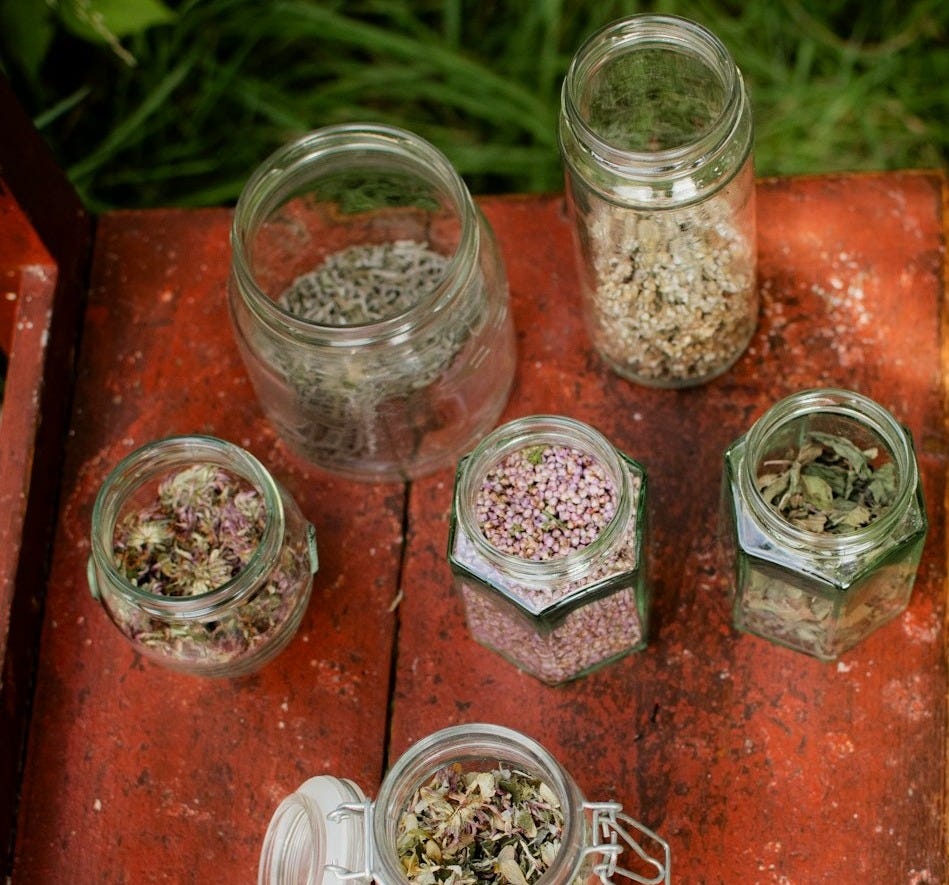
Let’s debate the effectiveness of using herbs for healing and whether they are effective.
Your doctor says herbs are not safe or effective! Is this the truth, or the effective slam campaign pushed by drug companies whose main purpose is to discredit herbs and to push their drugs and the profit to be made from them?
Question for all of you reading this Substack?
So, how did herbal use suddenly become ineffective and dangerous to use, according to our US doctors and the internet, after centuries of use by every civilization in the world?
Why are herbs and alternative medicine still used by doctors today in many foreign countries of the world, including Germany, if herbs are not effective?
The remainder of this Substack will address those questions.
The drug companies spend billions on drug advertising paid to the media sources you watch, including social media.
How much money is spent on drug advertising in the US? 10.1 billion overall, with 5 billion allocated to TV ads.
The drug companies and their drug reps educate the doctors on what the drug is used for, its side effects, which are downplayed and the dosages. Do they have a monetary interest in how they educate doctors? absolutely
Would you write prescriptions for Cipro if you knew it could have devastating long-term side effects for patients in some cases? Hopefully not. A good doctor would write a prescription for another antibiotic that is safer with fewer side effects.
“The pharmaceutical advertising industry in the US is a multi-billion-dollar sector, with total healthcare and pharmaceutical advertising reaching over $30 billion in 2024. This includes prescription drugs, over-the-counter medications, medical devices, and digital health solutions. The industry is heavily influenced by digital transformation and changing consumer healthcare behaviors. Direct-to-consumer prescription drug spending exceeded $10.1 billion in 2024, with over $5 billion allocated specifically to television advertising. Television advertising shows remarkable growth, with Q1 2025 spending reaching $729.4 million for the top 10 pharmaceutical brands, representing a 29.6% increase from the same period in 2024.The Global Statistics
Drug companies would go out of business if herbal medicine became the main treatment for disease again, as it was for most of the history of mankind. That is the truth of it, especially in the US.
Herbal medicine has been used by doctors and medicine men since time began! Fact
The use of herbal medicine is documented in the Bible and in every ancient manuscript preserved over time. It sustained the health of civilizations until the 1900s, when antibiotics were discovered.
How did ancient civilizations survive without modern medicine and antibiotics?
Ever consider that? You would never have been born if herbal medicine had not been used for all those centuries.
Today, traditional medicine is used worldwide. An example is Germany below:
“In Germany, there are approximately 700 herbal drugs that have passed the marketing authorization process. Additionally, there are 3311 fixed combinations of herbal medicinal products licensed or registered. www.bfarm.de”
“One of the driving forces that has resulted in mainstream acceptance of phytomedicine in Germany is the inclusion of phytotherapy in the medical and pharmacy school curricula. In the opinion of several medical groups, “modern phytotherapy is not perceived as alternative medicine, but as a part of so-called traditional medicine” [i.e., conventional medicine] (Schilcher, 1997c). Since 1993 all medical school students in Germany must successfully complete a portion of their board examinations in the area of phytotherapy as a precondition for practicing medicine (Schilcher, 1991). Medical education on medicinal plants and phytomedicines includes regular lectures in universities and medical schools, four one-week courses with 26 hours of lectures in phytotherapy in Weiterbildung (continuing education), lectures and courses in Fortbildung (postgraduate education), the publication of scientific literature (papers and books), the Commission E Monographs, and directions on product uses according to section 11 of the Second Medicines Act (AMG 76) (Schilcher, 1991, 1997c).”Herbs
Table 5: Conditions Treated with Phytomedicines
by General Practitioners in Germany\
Condition% Treated With
Phytomedicines
Psychovegetative syndrome
25 Diseases of: respiratory tract (esp. types of bronchitis)
16 heart and circulation (esp. arterial, venous, cerebral)
13 digestive organs (gastritis to Crohn’s)
9 locomotor apparatus (movement of limbs)
6 urogenital tract (dysuria in women or BPH in men)8
Source: Schilcher, 1997c based on Härter, Klimm and Salz.”
Today, traditional medicine is used worldwide.
“Traditional medicines (TMs) make use of natural products and are of great importance. Such forms of medicine as traditional Chinese medicine (TCM), Ayurveda, Kampo, traditional Korean medicine (TKM), and Unani employ natural products and have been practiced all over the world for hundreds or even thousands of years, and they have blossomed into orderly-regulated systems of medicine.” https://pmc.ncbi.nlm.nih.gov/articles/PMC6273146/
“Traditional medicine use is now a global reality: WHO
The World Health Organization (WHO) reports that 40 to 90 percent of the populations in WHO member states use traditional medicine. This practice is particularly relevant in regions where access to essential health services is limited, offering personalized and holistic care that supports overall well-being.
Traditional medicine is gaining global recognition for its therapeutic effectiveness and holistic view of well-being, despite the lack of dedicated health research funding for it.” biocascades.com
Doctors here state,” There is no research or clinical evidence to support the use of herbs. “
Yes, there are thousands of studies published on herbs, just not huge clinical studies. Germany is one example.
“Because of the high level of professional interest in herbs and phytomedicines in Germany, there is a considerable amount of scientific research conducted. Pharmacological and experimental studies are available mainly for the most important herbs and herbal preparations on the market, such as Valerian root, Echinacea herb and root, Ginkgo leaf special extract, St. John's Wort, Chamomile flowers, Milk Thistle fruit extract, and Hawthorn leaf and flower extracts.” Herbs and Phytomedicines in Germany
If you do the research in PubMed, you will find hundreds of published research studies on turmeric, ginger, and many other herbs that prove the effectiveness of herbs. Yes, they are smaller studies, but they are valid.
Why are there almost no large-scale drug company-run pharmaceutical clinical trials with herbs?
Let’s look at how and why clinical trials are operated.
The company conducting the clinical trial must have funding to conduct a study that costs billions.
Many times, the research is funded by a drug company that has an interest in the end result of the research, which is a drug that will work on an illness and make them billions.
If the drug’s clinical trial fails, they have lost billions of dollars. Most of the time, the drug trial fails because of ineffectiveness or severe side effects. That is why research fraud is rampant. They manipulate the results to get the drug passed into sale, or they hide the data altogether to get it through. My last article showed how prevalent the fraud is.
Have you ever wondered why billions have been spent on cancer research, and people are still dying from cancer? Cancer research projects make billions.
It is notable that, in many parts of Asia, cancer is successfully treated in many cases. That is why Americans with money go to Europe and Asia for cancer treatments not available here. That is not a reality for most people.
There are a few large-scale clinical trials using whole herbs because running such studies costs billions of dollars, and herbs can’t be patented. Companies that fund these research studies will not invest billions if there is no way to generate a return on their investment. They can’t make money on prescribing herbs.
Thus, the drug company isolates the principal active compound and either potentiates it or synthesizes it in its laboratory.
The drug company isolates the main active compound from an herb, which often contains 20 or 30 compounds shown to kill viruses or bacteria, then concentrates that compound or synthesizes it in the laboratory. Many drugs have their beginnings in herbs.
An example is Aspirin.
“Aspirin is modeled after the naturally occurring polyphenol salicylic acid—a compound found in a handful of plants, including Salix alba (white willow), Spirea spp. (wintergreens), and Betula spp. (birch).
All of these plants were traditionally used for conditions involving injury, pain, and inflammation.” https://thesunlightexperiment.com/blog/2018/6/7/9-famous-examples-of-drugs-that-came-from-plants
There are, however, many thousands of small clinical studies on herbs, mostly from countries such as China, India, Russia, Japan, and Peru, whose research studies are not accepted by the US.
Is the lack of large clinical studies the huge issue, that modern medicine makes it?
Consider this fact:
The history of herbal use over centuries constitutes the largest crude clinical study in the world, encompassing many different civilizations that successfully used herbs to treat illnesses and diseases.
Herb use dates back to the Bible, was practiced by ancient civilizations, and continues in many countries today, including Asia. It remains the primary medicine used in those countries today.
If herbs were not effective or safe, the first civilizations would have wiped themselves out of existence centuries ago.
Most civilizations were destroyed by invasion, climate change, and socio-economic factors, including crop loss and drought.
What about the Black Plague?
Herbs did not work well against the black plague but perhaps if they had used a more potent, more effective herb than those available, it might have helped. We will never know. The doctors also lacked the expertise, knowledge, or tools to combat the disease. Modern medicine might not have worked either, since the disease was spread by rats and poor sanitation.
The Black Plague was caused by poor sanitation, a lack of clean water, and rat-borne transmission of the disease caused by the bacterium Yersinia pestis. It was thought then that the sickness was supernatural due to evil spells and demons. They used counterspells and incantations against the sickness.
Some people tried to use local herbs to treat the disease. The plague spread so rapidly that they had little time to experiment with herbal remedies against the disease. There might not have been a herb strong enough to work growing in that area. The herbs employed were insufficient to combat the disease.
‘While some herbs possessed antimicrobial properties, their effectiveness in treating the Black Death was limited. The bacterium Yersinia pestis, responsible for the plague, was highly contagious and deadly. Furthermore, the lack of scientific understanding of disease transmission and the role of bacteria meant that many treatments were based on superstition and folklore rather than evidence-based medicine.”
“However, serious diseases were thought to be of supernatural origin, attributed to spells, demons, or offended gods. Treatment involved luring back errant souls or extracting evil intruders through counterspells, incantations, and other means.”
“Superstitions also played a significant role in the medieval approach to the plague. Amulets, charms, and talismans were widely used, often inscribed with prayers or magical symbols believed to offer protection against the disease.”
“The decline of the Black Plague was influenced by improved sanitation, quarantine measures, changes in rat populations, and potential development of immunity among survivors.”
https://worldhistoryedu.com/medieval-medicines-used-during-the-black-death/
In holistic medicine, you need to get to the root cause, which in this case was rats spreading disease, contaminated water, and poor sanitation.
How did our ancestors survive without modern medicine and antibiotics? Ever consider that?
When exploring herbal use, you will find that people in different parts of the world, without knowing one another, use the same herbs for the same complaints.
The different native peoples observed the animals and the herbs and berries they ate when sick. They watched the birds to see what they ate.
The natives then experimented with the herbs over the centuries for various health conditions and found them effective. If someone is dying of a fever with severe symptoms and an herb is effective, they used the same herb again.
After repeated successful use, it became a common herbal medicine among the local population in that country. No, they didn’t know why it worked or the name of the properties that were effective, but it worked.
The natives conducted their own crude clinical studies on various herbs, identifying which illnesses the remedies addressed. If herbs had been ineffective, those civilizations would have been wiped out.
Until 1910, medical schools in the US taught physicians herbal medicine, homeopathy, and naturopathy.
In 1910, medical schools were banned from teaching anything but pharmaceutical drugs. It was the decision of two men, Andrew Carnegie and John D. Rockefeller, to focus solely on pharmaceutical-based training.
They published the Flexner Report of 1910, which criticized all forms of alternative medicine, resulting in the elimination of non-pharmaceutical medicine courses from medical curricula. It was all about profits then and now.
So, throughout history, herbal medicine was used effectively by every civilization that ever existed, but two men managed to alter history to claim that herbs are ineffective.
Penicillin was first developed in 1928 and was then widely used in clinical practice beginning in 1948. Herbal medicine usage was then considered obsolete because drugs could be more easily manufactured in laboratories.
It is notable that, since 2017, some medical schools now require physicians to complete integrative medicine courses in Chinese medicine, acupuncture, chiropractic medicine, and massage, but only as complementary treatments alongside prescription drugs, chemotherapy, and radiation. If herbal medicine is not effective, why is it required for their training now?
Despite this, most doctors in the US will discourage you from taking herbs or give you a hard time for taking them. We are in Colorado, so this may be different in other states.
I have never seen a physician, except for one in TN who supported our use of herbs. He treated many Amish and had learned from them that herbs can be used effectively. He would not recommend herbal remedies unless the patient refused conventional treatment. Our doctor at the time was a ‘closet’ holistic physician. I found this out by accident when he noticed my husband's skin rash was stained yellow after treating it with goldenseal. He knew what it was and how it was used. He supported our use of herbal medicine but hid that unless you asked.
In my article here, I already shined the light on the problem and safety of drugs, including the destruction of your gut biome, the side effects of some of them, like Cipro, that can land you in the hospital, the problem with drugs being manufactured in China and India, and the dishonesty in drug manufacturers such as Bayre and the rest of them. You need to read that article first here. Your health problems are not due to a deficiency of medication.