

Many of you reading this article buy organic certified products and herbal supplements because you feel they are safer. You may think they contain more quality nutrients with less contamination. The reality is that this is not always true. Find out why organic certified products may not live up to the standards you have in your mind and values.
I am going to tell you about my experience importing certified organic moringa leaves from India a few years ago. The reality is, we nearly shut down our San Diego business because of our inexperience, fraudulent organic certificates, and contaminated herbal products.
In 2015, we were living in San Diego. I discovered Moringa Oleifera and its benefits. It is a tree with leaves that are extremely nutritious. I bought seeds, and all of them grew quickly. I had baby trees everywhere. We fell in love with growing them and decided to start a business with my husband to sell them. We named our business Moringa and Healing Herbs.

We spent the time and money to get a nursery license and began selling the trees. It was a beautiful area to grow them. Then we decided we should sell the packaged Moringa powder and tea as well. After investigating several US companies that wholesaled Moringa products, we could not really confirm the quality of the supplements. All were vague about their testing. Vague means they are lying about the tests they perform.
So, we decided to import Moringa products directly from India. That way, we could confirm it was organic and properly tested. Our goal was noble.
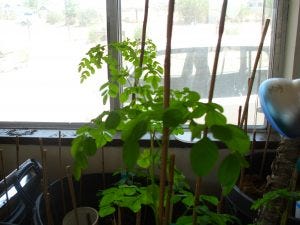
After two months of investigation and correspondence, one company stood out from the others. The company's owner sent me pictures of their plantation, samples of their products, and a very realistic, certified-organic certificate.
We sent them $500.00 as a starting order. When the order never arrived, I investigated the company through the Organic Certifying Organization directly in India.
Well, in the end, I was told his certificate was stolen from another company and was fraudulent. We lost all the money. This guy evaded authorities after bilking several other companies in that same period and disappeared into the millions who live there.
Organic Certificates Can Be Forged
Organic certificates can be forged, so they must be investigated by the country itself. This takes a lot of time, effort, and frustration. Many of the plantations are crude, with basic, simple equipment; workers, including children who are not healthy; and a lack of clean water and sanitation facilities.
Cleaning and drying the products are often done in the open air or in less-than-sterile buildings. The storage areas are open to rodent contamination and product destruction. This is India we are discussing. In Indonesia, China, and the Philippines, the same problem exists.
Investigation of the company doesn’t always work either
So we cut our losses, and next, I investigated various companies through the certifying agent in India. I was already emailing the representative about the fraudulent company, and we had exchanged several emails.
That agent recommended a company, confirming it was a great company with certified organic status and quality products. I investigated this company with extensive due diligence. I was now confident in the quality of the product I was buying. I did not have the money to test it myself here in the US.
The shipment is confiscated by port agents.
So we sent them $800.00, their minimum order. Their customer service was excellent. Four weeks later, the shipment entered the US. It was inspected while on board and flagged for label issues. We were then informed that the product would be tested as well.
Next, we received a notice that the product had been found to contain dirt, filth, insect parts, and mouse parts. We would not get the shipment back, and they would destroy it. I was devastated at the news.
The good news is that the shipment was tested. What if I had sold that product to my customers? That was the end of importing products for us. We could not afford to wonder about the possibly contaminated product. We could not, with a clear conscience, tell our customers that the product was safe.
We eventually got the money back from the company, but this experience taught me several important lessons.
Importing food and herbs is not for the faint of heart.
Importing is a complicated process that requires real expertise to avoid losing your money and your business. If you want to import herbs to sell, you'd better get sage advice first from someone actively working in the business. Importing food and herbal products is even more complicated, filled with all sorts of surprises from port inspectors and the FDA.
How products become contaminated in the steps leading up to your consumption.
Organic certification does not guarantee that a product is free of naturally occurring contaminants such as dirt, weeds, insects, rodent hair, and feces.
Despite annual testing in India, the products can still be contaminated during the months without inspections.
Contaminated water, contamination from the people picking the leaves, equipment that was not disinfected properly, drying procedures that were shoddy, or storage in a building that was not safe from insects or rodents.
Organic certification does not mean that those organic standards and requirements were followed 100 percent of the time. If you know it’ll be a year before the next inspection, it is easy to cut corners on quality control.
Organic quality depends on owners who follow those standards every day and take pride in their organic products. The organic certificate is only as good as the owners who either live up to those standards or cut corners.
The inspections in those Asian countries are highly questionable and often fraudulent. How many companies have the time to check out these foreign growing fields? Do they actually visit their plantations to see their farming practices firsthand? The second company was legitimate, but its organic-certified products were still not safe for consumption.
You cannot assure safety unless the products are tested in a US GMP-certified lab.
You cannot testify to the quality of your products for your customers unless they are tested for heavy metals, E. coli, bacteria, lead, and other contaminants in a US facility.
I offer another example from San Diego, CA, and its farmers’ markets.
While we lived there, we visited the various farmers' markets on weekends. I loved browsing the organic produce. I did wonder how these smaller producers kept up with bringing products to the market, week in and week out.
Then an investigation was triggered by complaints that the vendors were substituting store-bought produce when they were short on their ability to supply their own organic offerings. It turned out to be true.
How do you tell organic produce from store-purchased?
If you have only one box of your own organic produce and need much more to sell to make a profit and pay vendor fees, what do you do? It depends on your commitment to honesty and integrity.
How easy is it to buy some retail lettuce, add it to your organic produce, mark up the price, then sell it as organic, making a profit? In doing so, you made enough to cover the vendor fees. Remember, those vendors pay a price to be a part of the Farmer’s Market in each location. They have many expenses. They have to make a profit.
Here are two more examples below:
Just about two years ago, a farmer was indicted for selling grain as organic when it was not. He got away with it for a few years. He did get caught, but how many people ate that food, thinking it was organic? This happens more often than you would think.
When we lived in Nevada, I went to buy chickens from a woman who also sold shares in her organic vegetable crops, grown in her backyard. She warned me about another woman in the area who substituted store-bought greens for her offerings when insects destroyed the whole crop. She later got caught and fined. She had been secretly spraying her vegetables with unapproved insecticides at night on the days when her shop was closed.
Organic certificates are only as good as the owner farmers who must adhere to the strict organic guidelines. Their honesty about how they grow their crops is the final criterion for determining whether a food is truly organic and free from contamination.
Cultivate friendships with local farmers who live in your area and visit their farms. Talk to them and ask them questions. When you are asking questions, like what are the organic steps that you take in your fields, watch their eyes, listen to their voice, and observe their behavior. When people are lying, they look down, look away from you, and refuse to look you straight in the eyes. Do they avoid giving you answers and explaining the procedures they take? Body language will tell you a lot if you can trust them. You can learn a lot that way.
Be observant and mindful when visiting farmers’ markets.
If nothing else, ask these same questions to the vendor at the farmer’s market. Observe him in the same way. Listen to your gut feeling about the vendor. Ask as an interested consumer, not someone looking to shut him down. Be casual and friendly as you speak with the vendor. A vendor proud of his organic steps will gladly tell you and show his pride. They want to educate people on buying organic and what it takes to grow organically.
Many growers use organic standards but lack organic certification.
You should also realize that some farms use organic standards but don’t have organic certification because it can take months to obtain it. The red tape is endless and enough to discourage anyone from the effort.
Some farms, lacking an organic certificate, may produce and sell higher-quality products than those with the certificate. Again, ask questions and watch body language. Remember, it is the farmers' honesty and their growing practices that make your food healthy and worth buying.
Overall, most organic growers are honest and dedicated.
There are many thousands of organic farmers who produce quality vegetables, fruit, and herbs. They follow the organic guidelines with pride. When organic crops are grown properly, they are healthier and contain more vitamins, nutrients, and trace minerals than conventionally raised crops. It is important to buy organic while being mindful of vendors who may not be trustworthy. Shop smart and use discretion when buying organic.
All for today, Cathryn Freer, the herbladyisin